Spring
March to April
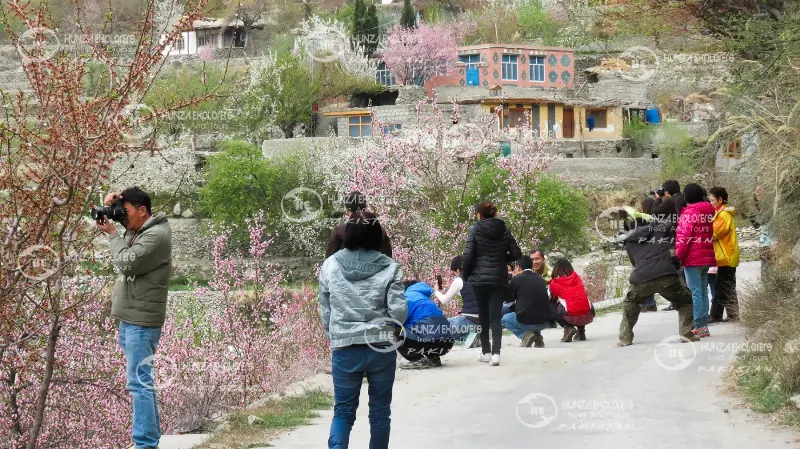
Apricot and cherry blossom in the lower valleys, mostly in April. The higher villages are still cold and the high passes are closed.

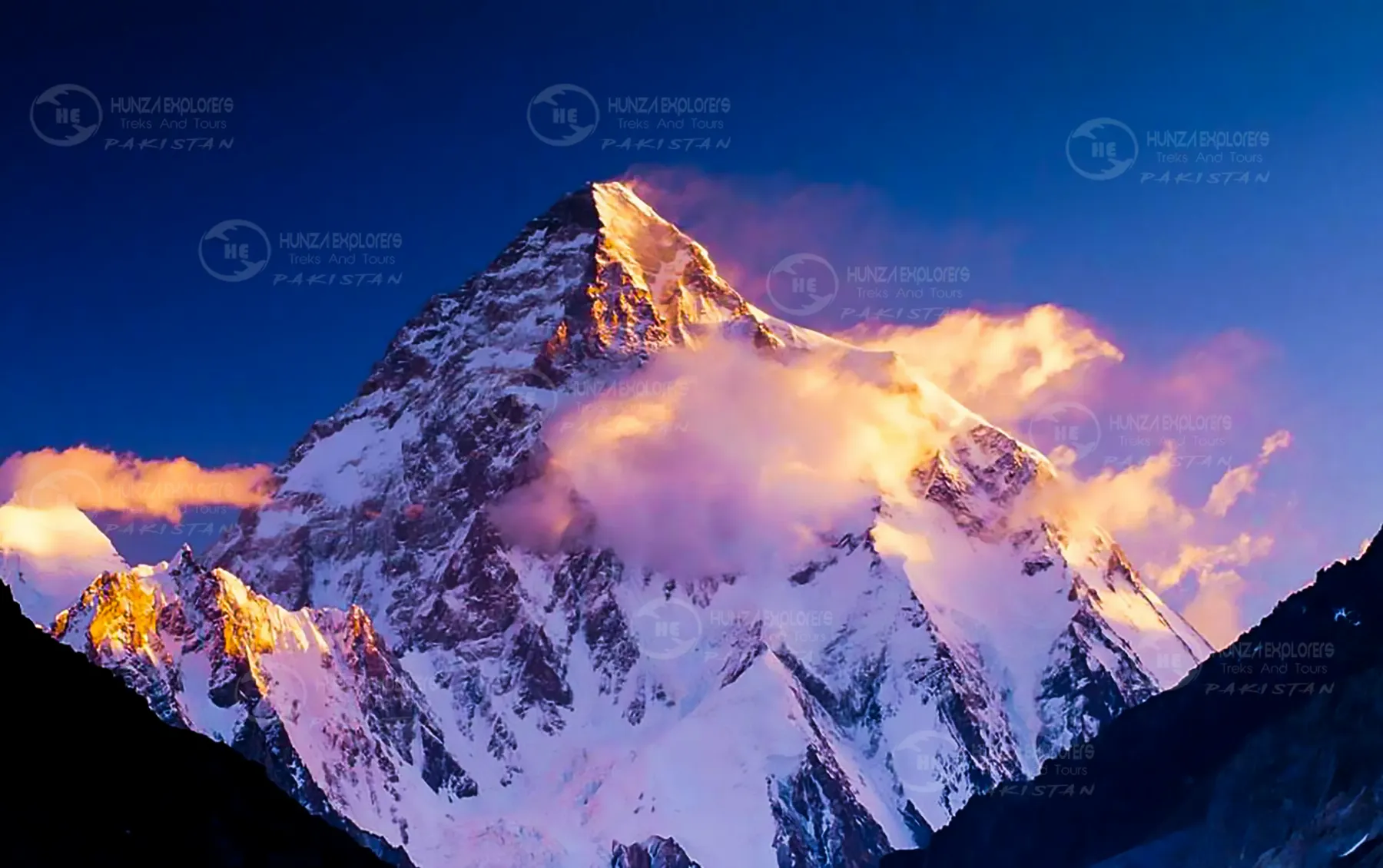
Where the Karakoram, the Himalaya and the Hindu Kush meet
Five of the world's fourteen 8,000-metre peaks stand in Gilgit-Baltistan, but most travellers come for the valleys below them: apricot terraces, stone forts, turquoise lakes and a river that is never far from the road.
Gilgit-Baltistan is where three of the great ranges of Asia meet: the Karakoram, the western Himalaya and the Hindu Kush. K2, Nanga Parbat, Broad Peak and both Gasherbrums are in this one region, and so are some of the longest glaciers outside the polar regions. Yet most visitors spend their days in the valleys rather than on the summits. The usual picture is a stone village, a terrace of apricot trees, a suspension bridge, and a grey river somewhere far below the road.
Hunza is the best known. It has the old forts of Baltit and Altit, orchards that turn gold in October, and the Karakoram Highway running up through Gojal to the Khunjerab Pass. Skardu and the Baltistan side feel closer to Tibet: wide, dry valleys, sand dunes beside glaciers, high lakes, and the road to K2 and the Baltoro. The western districts, Diamer and Ghizer, are quieter. Nanga Parbat is seen from Fairy Meadows, and the Phander valley is known mostly for its trout streams and the road towards Chitral.
The same calendar applies in every valley of Gilgit-Baltistan. Spring, March and April, brings blossom to the lower valleys. Summer, May to September, is the main season: it is the only time Deosai and the high passes are open, and the time for trekking. Autumn, October and November, gives the golden light that many people travel for. Winter, December to February, is cold and quiet; Hunza is still reachable by road, but the high valleys are closed.
The Karakoram Highway from Islamabad takes two days, usually with a night at Chilas or Besham. Flights from Islamabad to Gilgit and Skardu are short and spectacular but depend on the weather, so we never plan a tight connection around them.
One calendar for every valley in Gilgit-Baltistan.
Apricot and cherry blossom in the lower valleys, mostly in April. The higher villages are still cold and the high passes are closed.
The main season. Every valley is open, and this is the time for trekking, Deosai, the Khunjerab Pass and the K2 approach.
Golden leaves in the orchards and the clearest light of the year. Nights are cold and the first snow reaches the high valleys in November.
Cold and quiet. Hunza and Gilgit stay reachable by road, but the high valleys and passes are closed.
 Valley
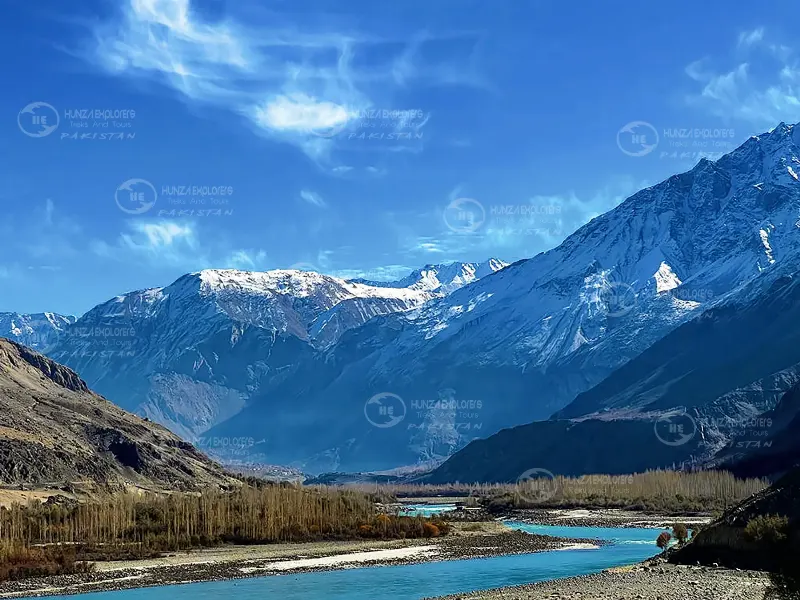 Valley
A green valley, a 17th-century fort and the start of the Baltoro trail
 Valley
 National park
 Mountain
 Mountain
 Pass

Hunza and Phandar valleys in Gilgit-Baltistan are a true paradise for nature lovers and adventure seekers, especially during the s...

Shimshal Kuch Festival is a vibrant cultural celebration that takes place twice a year in the scenic Shimshal Valley of Pakistan’s...

If you are planning to take on the Great Karakoram Traverse Trek, consider booking with Hunza Explorers. As a tour operator, we ha...

Experience the magic of spring in Skardu with our expert guides at Hunza Explorers. Our Skardu Cherry Blossom Tour offers top-notc...

At Hunza Explorers, we offer expertly guided tours to Swat and Hunza Valley, providing visitors with an unforgettable experience o...

Experience the breathtaking beauty of Pakistan’s autumn season with the expert team of Hunza Explorers on a tour of the Hunza Vall...

Hunza Valley is a true paradise on earth, especially during the spring season when the cherry and apricot trees are in full bloom,...

The K2 Base Camp and Gondogoro La Pass Trek is a challenging and rewarding journey through the remote and rugged mountain terrain...

Hunza Valley is a beautiful and serene destination in the northern regions of Pakistan, known for its breathtaking natural beauty,...
For most trips, summer, May to September, when every valley is open and trekking is at its best. Spring, March and April, has blossom in the lower valleys, and autumn, October and November, gives the golden colours. Winter, December to February, is cold; Hunza stays reachable but most high valleys are closed.
By road along the Karakoram Highway, which takes about two days to Hunza with an overnight stop, or by a one-hour flight to Gilgit or Skardu. Flights are cancelled often in poor weather, so we keep a road plan in reserve.
Most of the main valleys can be visited without a special permit. Some trekking areas and national parks, including the Baltoro and Deosai, require permits and fees that we arrange as part of your booking. Rules change, so we confirm them before you travel.
Send your dates and what you hope to see. We reply with a plan and a price, and you confirm only when you are happy with it.


